
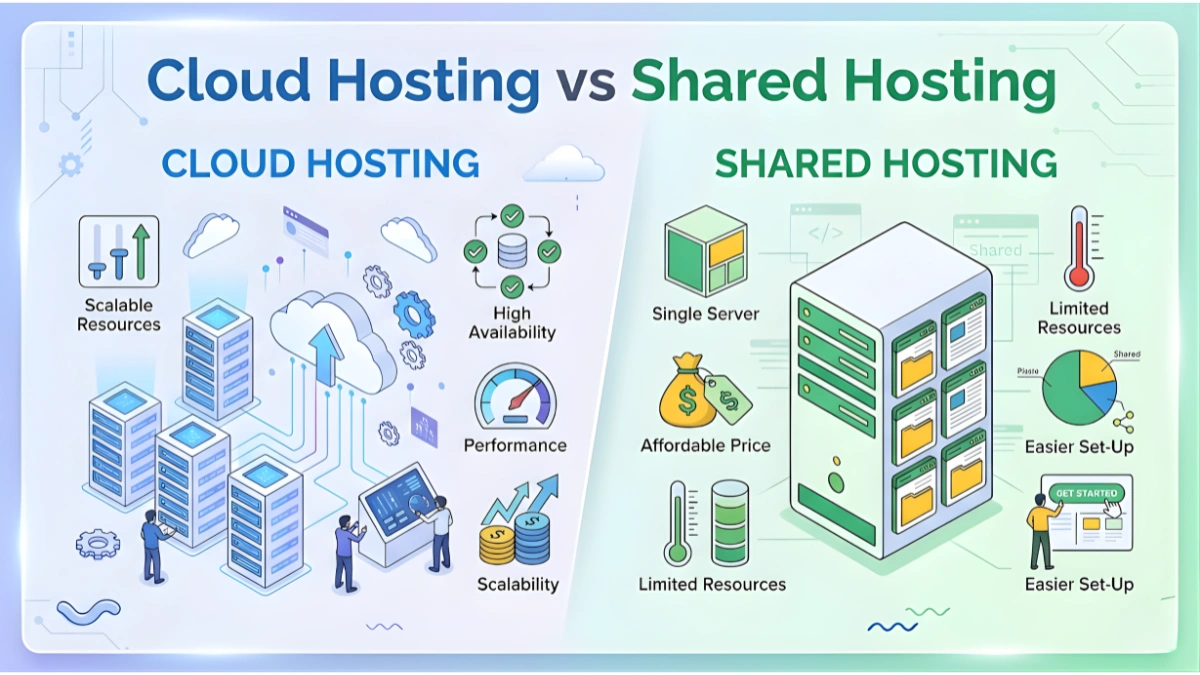
Choosing between cloud hosting and shared hosting has become one of the most common decisions for website owners because both options serve different needs depending on traffic size, technical goals, and business growth plans. In 2026, shared hosting still remains popular for small websites and beginners because of its low cost, while cloud hosting is increasingly preferred by businesses that need stronger performance, uptime stability, and scalability. The right choice usually depends on whether the website is expected to remain small or grow steadily over time.
Why Shared Hosting Is Still Popular for Beginners
Shared hosting remains attractive because it is the lowest-cost entry point for launching a website. Beginners often choose it because setup is simple, control panels are easy to use, and technical management is usually handled by the hosting provider. For blogs, portfolio sites, and small informational websites, shared hosting often provides enough performance at an affordable monthly price.
Why Cloud Hosting Is Preferred for Growing Websites
Cloud hosting becomes more attractive when a website starts receiving higher traffic or requires stronger uptime reliability. Because resources are distributed across multiple servers, traffic spikes are handled more smoothly and website slowdown becomes less likely. Businesses often choose cloud hosting because it allows resources to expand without needing full server migration.
| Hosting Type | Main Structure | Main Strength |
|---|---|---|
| Shared Hosting | Multiple websites on one server | Low monthly cost |
| Cloud Hosting | Resources spread across multiple servers | Better scalability |
| Shared Hosting | Limited server control | Easy for beginners |
| Cloud Hosting | Flexible resource allocation | Higher uptime stability |
| Shared Hosting | Fixed shared resources | Suitable for low traffic |
Performance Difference Matters for Business Sites
Shared hosting places many websites on the same server, so performance can drop when other websites consume heavy resources. Cloud hosting avoids this issue more effectively because resource allocation is more flexible. This makes cloud hosting stronger for websites where speed directly affects customer trust, SEO rankings, or online sales.
Cost Difference Is Important at Early Stages
Shared hosting remains cheaper because infrastructure is divided among many users. Cloud hosting usually costs more because it provides stronger reliability and scaling capability. However, websites expecting long-term growth often find cloud hosting more cost-efficient later because fewer upgrades or migrations are needed.
Security and Stability Comparison
Cloud hosting usually provides stronger isolation and better uptime because server failure on one machine can shift traffic to another system. Shared hosting can be more affected if one website on the server creates heavy load or technical problems. For business websites handling customer data, this reliability becomes important.
Which Hosting Type Is Better for Long-Term Growth
Shared hosting is usually best for very small websites, while cloud hosting becomes the stronger choice when growth, speed, and scalability are important. Many website owners begin with shared hosting and move to cloud hosting once traffic increases.
Conclusion: Shared hosting remains ideal for low-cost beginner websites, while cloud hosting is better for growing projects that need stronger speed, uptime, and future scalability.
Disclaimer: Hosting features, pricing, and included resources vary by provider. The best choice depends on website traffic, business goals, and future growth expectations.