
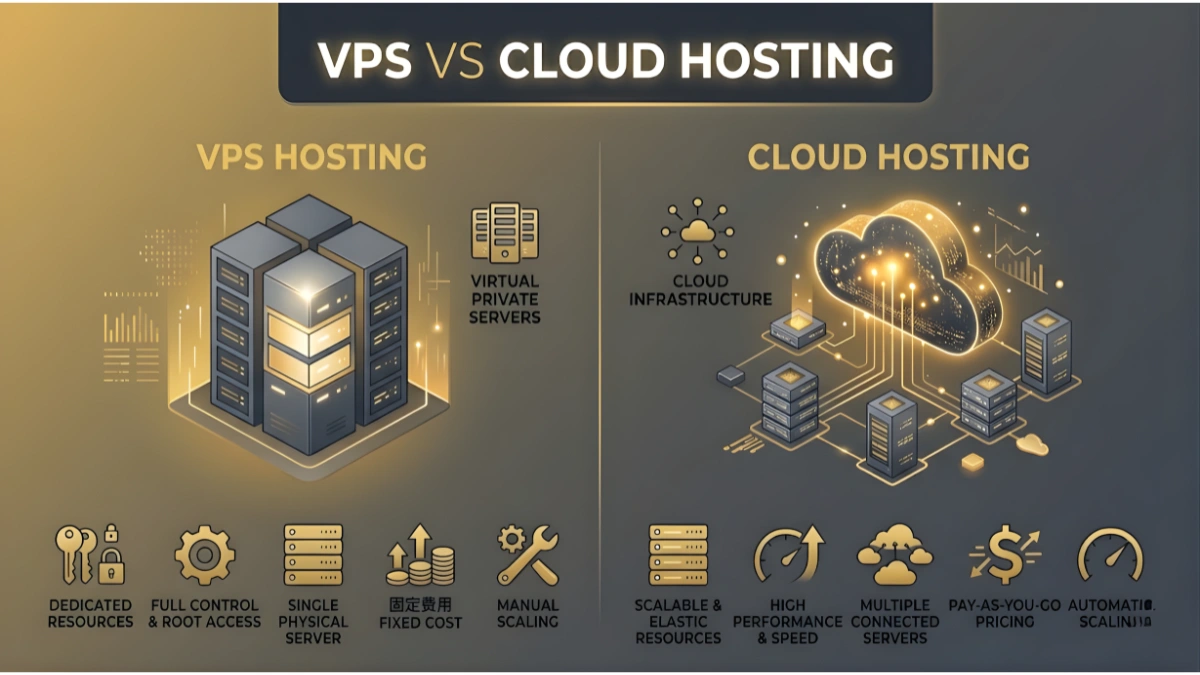
VPS hosting and cloud hosting are often compared because both provide stronger performance than shared hosting, but they work very differently when it comes to scalability, resource distribution, and long-term flexibility. In 2026, businesses, developers, and website owners increasingly compare these two hosting models before launching websites because choosing the right infrastructure directly affects speed, uptime, and future upgrade possibilities. The best option usually depends on whether the project needs fixed resources or flexible cloud expansion.
Why VPS Hosting Is Preferred for Controlled Server Resources
VPS hosting remains popular because it gives users dedicated portions of a physical server. This means CPU, RAM, and storage are allocated clearly, which creates predictable performance for websites that need stable resources. Many businesses choose VPS because they want more control than shared hosting while keeping monthly costs manageable. It also allows users to install custom software and manage configurations more freely.
Why Cloud Hosting Is Better for Flexible Growth
Cloud hosting becomes stronger when websites need to handle changing traffic levels. Because resources come from multiple connected servers, cloud hosting can expand quickly during higher demand. Businesses often prefer cloud hosting when traffic spikes are expected because scaling happens more smoothly without moving to a new server.
| Hosting Type | Main Structure | Main Strength |
|---|---|---|
| VPS Hosting | Virtual private server on one physical machine | Dedicated fixed resources |
| Cloud Hosting | Resources distributed across multiple servers | Flexible scalability |
| VPS Hosting | Predictable server allocation | Stable control environment |
| Cloud Hosting | Dynamic resource expansion | Better uptime reliability |
| VPS Hosting | Fixed monthly plans | Easier budgeting |
Performance Difference Between VPS and Cloud Hosting
VPS hosting performs very well when traffic remains stable because dedicated resources stay reserved for the user. Cloud hosting becomes stronger when traffic changes often because extra resources can be added dynamically. For websites expecting seasonal growth, cloud hosting usually provides better long-term stability.
Pricing Structure Is Different
VPS hosting usually follows fixed monthly pricing, which makes budgeting simple. Cloud hosting often uses scalable pricing where cost rises as resource usage increases. Businesses with predictable traffic often prefer VPS, while growth-focused websites may accept cloud billing flexibility for stronger scaling.
Security and Reliability Comparison
VPS hosting offers isolated server environments that are stronger than shared hosting, but cloud hosting often delivers higher uptime because server failure can be absorbed across multiple systems. This makes cloud hosting especially attractive for websites where downtime directly affects business operations.
Which Option Is Better for Long-Term Business Use
VPS hosting fits projects needing stable control, fixed budgeting, and predictable performance. Cloud hosting fits websites expecting traffic growth, wider scaling needs, and stronger uptime protection.
Conclusion: VPS hosting is best for websites needing fixed dedicated resources, while cloud hosting is stronger for projects requiring flexible growth and long-term scalability.
Disclaimer: Hosting plans, pricing, and available resources vary by provider. Users should compare technical requirements before choosing between VPS and cloud hosting.