
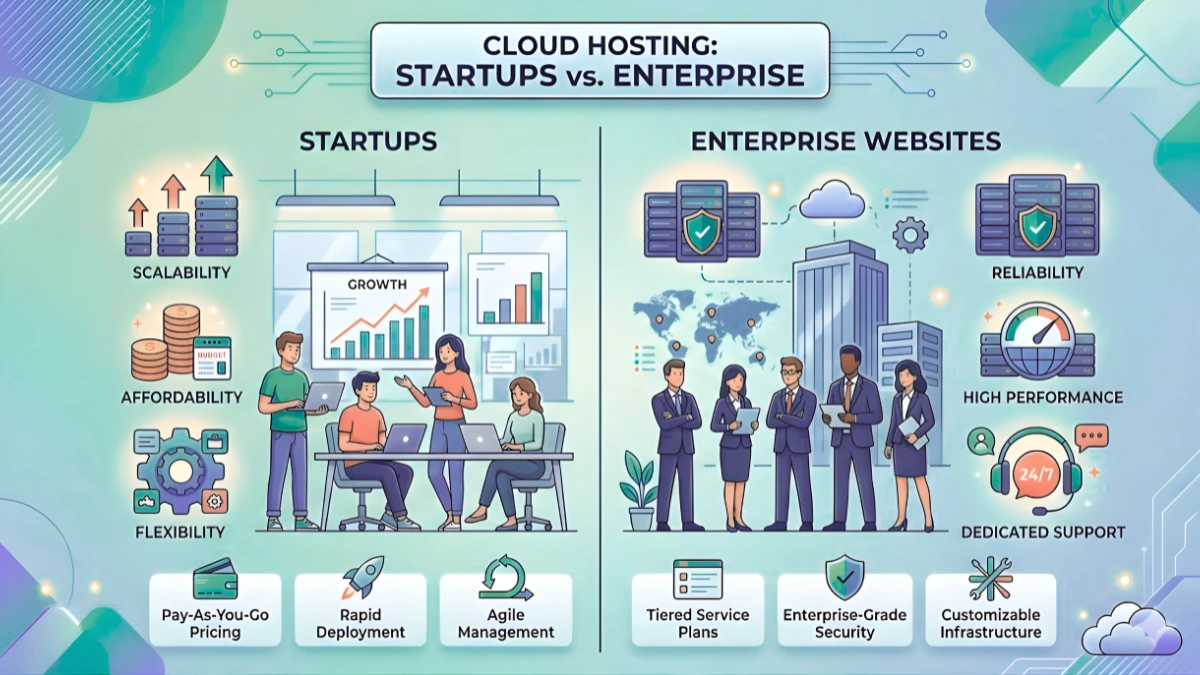
Cloud hosting requirements differ greatly between startups and enterprise websites because both operate with different budgets, traffic expectations, and technical priorities. In 2026, startups usually look for affordable entry plans, simple scaling, and predictable monthly billing, while enterprise websites prioritize uptime guarantees, advanced security layers, global infrastructure, and high-capacity resource control. Choosing the right cloud hosting plan depends on how fast the business expects to grow and how critical website performance is to daily operations. A startup can often begin with lighter cloud resources, while enterprise systems usually need infrastructure that supports heavy workloads from the start. This difference makes plan selection an important long-term business decision.
Why Startups Usually Choose Flexible Entry-Level Cloud Plans
Startups often begin with cloud hosting plans that allow growth without high initial cost because early traffic is usually unpredictable. Smaller businesses typically prefer platforms that offer simple resource upgrades so they do not pay for unused infrastructure during early stages. Managed cloud environments are especially attractive because founders often want to focus on product growth rather than server administration. A flexible entry plan also helps startups test market demand before investing heavily in larger infrastructure. For many new businesses, predictable billing becomes just as important as technical performance.
Why Enterprise Websites Need Stronger Infrastructure from the Beginning
Enterprise websites usually handle larger traffic volumes, multiple applications, customer databases, and continuous user activity across different regions. This means cloud plans must include stronger uptime protection, load balancing, advanced backup systems, and higher processing capacity. Enterprises often choose premium infrastructure because even short downtime can affect operations, customer trust, and revenue. Security also becomes more critical because larger systems often manage sensitive customer information and business-critical processes. As a result, enterprise hosting decisions focus heavily on reliability and risk reduction.
| Business Type | Hosting Focus | Main Strength |
|---|---|---|
| Startups | Entry-level cloud plans | Affordable growth flexibility |
| Enterprise Websites | High-capacity infrastructure | Large-scale reliability |
| Startups | Managed cloud hosting | Low technical workload |
| Enterprise Websites | Dedicated cloud environments | Advanced control and security |
| Startups | Fixed monthly billing | Easier cost planning |
Managed Hosting Is More Valuable for Startups
Cloudways remains highly attractive for startups because it simplifies server management while still providing scalable infrastructure. Startups often prefer managed cloud hosting because backups, monitoring, and security settings are already handled through one dashboard. This allows smaller teams to launch quickly without hiring dedicated infrastructure specialists. Managed platforms also reduce operational mistakes during early growth phases. For startups with limited technical staff, this often creates stronger practical value.
Enterprise Businesses Prefer Broad Infrastructure Ecosystems
Amazon Web Services remains highly preferred among enterprise businesses because it supports large infrastructure expansion, advanced networking, and complex workload distribution. Enterprises often need many cloud services connected together, including storage systems, databases, analytics tools, and security layers. Large cloud ecosystems help these businesses maintain long-term infrastructure inside one environment. This also reduces migration complexity when systems become larger over time.
Cost Structure Differs Strongly Between Startup and Enterprise Plans
Startup cloud plans usually focus on keeping monthly billing low while preserving upgrade flexibility. Enterprise plans often cost significantly more because they include higher resource reserves, stronger support agreements, and advanced infrastructure features. What looks expensive for a startup may still be normal for enterprise systems because business risk and uptime requirements are much higher at larger scale.
Which Plan Makes More Sense Long Term
The right choice depends on business stage. Startups benefit from flexible plans that can grow gradually, while enterprise websites need infrastructure strong enough to protect performance from day one. Choosing too small a plan can create migration problems later, while overpaying too early can reduce cost efficiency.
Conclusion: Startups usually benefit most from flexible managed cloud plans, while enterprise websites need larger infrastructure built for reliability, security, and long-term operational scale.
Disclaimer: Hosting plans, support levels, and infrastructure features vary by provider and workload size. Businesses should compare live specifications before selecting a long-term cloud plan.