
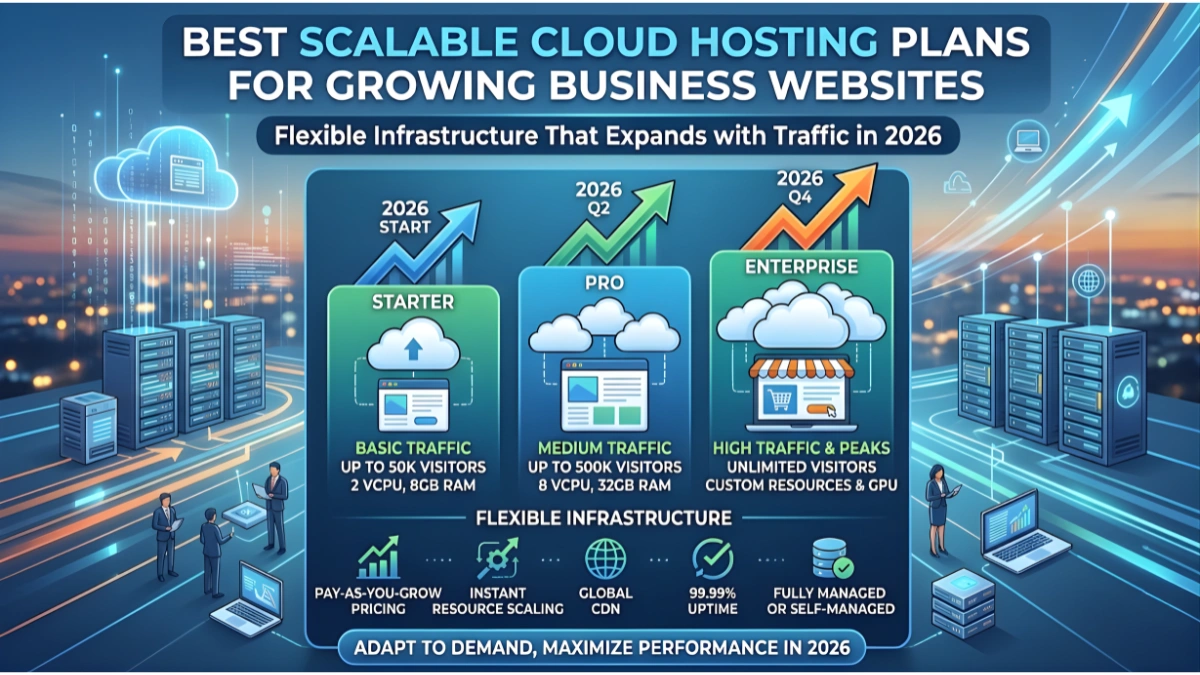
Scalable cloud hosting has become essential for growing business websites because traffic patterns now change quickly as digital campaigns, seasonal demand, and customer activity increase. In 2026, businesses are choosing hosting plans that allow resources such as CPU, RAM, bandwidth, and storage to expand without forcing a complete server migration. Providers that offer simple scaling, predictable billing, and strong uptime are gaining stronger attention because website interruptions during growth can directly affect revenue and search visibility.
| Brand Focus | Platform | Main Strength |
|---|---|---|
| Amazon Web Services | AWS Lightsail | Flexible scaling for growing workloads |
| Cloudways | Managed Cloud Hosting | Easy vertical scaling with managed tools |
| Google Cloud | Compute Engine | Strong global infrastructure for expansion |
| DigitalOcean | Droplets | Simple resource upgrades for startups |
| SiteGround | Cloud Hosting | Business-ready support with scalable resources |
Why Scalability Matters for Business Growth
A growing business website often begins with moderate traffic but can quickly require more server power when marketing campaigns perform well or customer demand rises. Cloud hosting solves this by allowing server resources to increase without long downtime. Businesses increasingly prefer this model because it prevents slow loading and keeps customer experience stable even when visitor numbers rise suddenly.
Why AWS Lightsail Remains a Strong Growth Option
AWS Lightsail is widely preferred because businesses can begin with smaller monthly plans and move upward as usage expands. This allows websites to start cost-efficiently while still staying inside the same cloud ecosystem when stronger resources are needed later. Its global infrastructure also supports reliable delivery across different regions.
Managed Scaling Adds Practical Value
Cloudways attracts growing businesses because scaling happens through a managed interface rather than manual infrastructure work. Server size can be increased without handling complex backend operations, which makes it practical for business owners who want performance growth without technical overhead. This becomes especially useful when websites need more resources quickly during traffic surges.
Why DigitalOcean Fits Fast-Growing Startups
DigitalOcean remains popular because its Droplet plans allow simple CPU and RAM upgrades while pricing stays easy to understand. Startups often choose this provider because scaling remains transparent and server deployment is fast. Businesses with technical flexibility often use it as an affordable first cloud platform before moving into larger infrastructure layers.
Performance Stability Is Just as Important as Scaling
Scaling alone is not enough if server performance becomes inconsistent during traffic growth. Businesses therefore compare uptime history, SSD performance, and data center coverage before selecting a provider. Strong scalability only delivers value when website speed remains stable under heavier demand.
Why Growing Websites Continue Moving to Cloud Plans
As websites become central to lead generation, customer communication, and online sales, businesses increasingly treat scalable hosting as long-term infrastructure rather than a short-term technical decision. Cloud plans that expand smoothly reduce future migration costs and protect digital growth.
Conclusion: The best scalable cloud hosting plans in 2026 are the ones that combine easy resource upgrades, stable uptime, and predictable pricing for businesses expecting steady digital growth. (TechRadar)
Disclaimer: Hosting plans, scaling limits, and included resources vary by provider and billing model. Businesses should compare current specifications before selecting a cloud hosting plan. (Utho)