
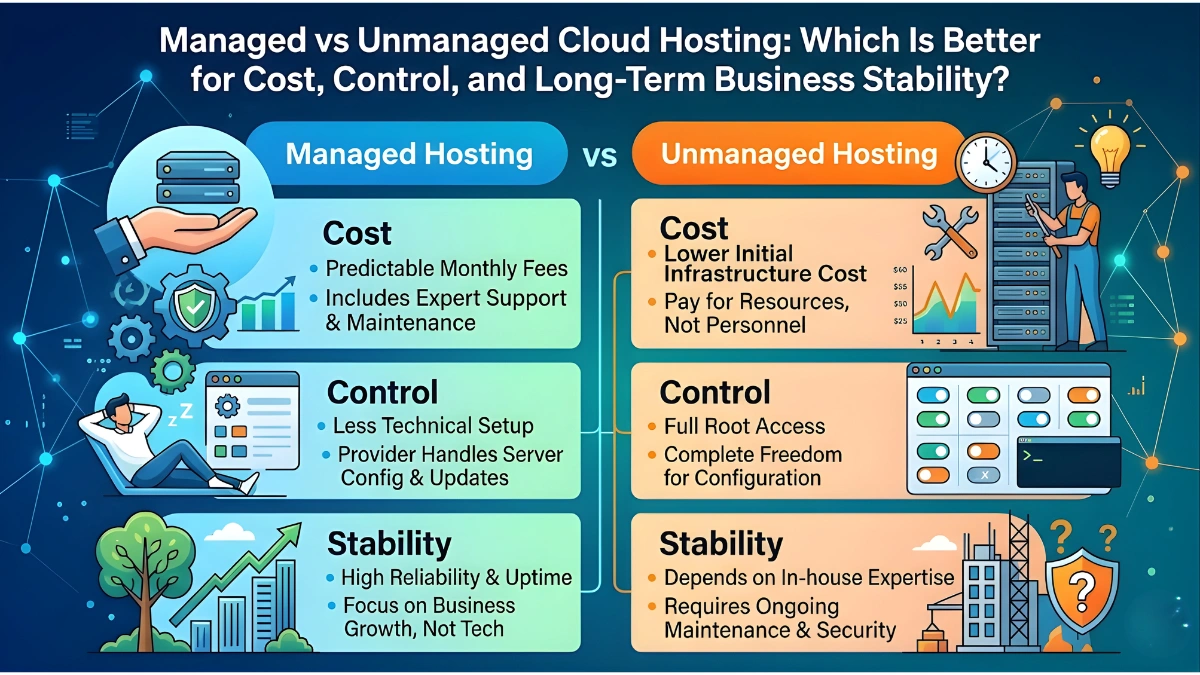
Cloud hosting decisions increasingly depend on how much technical control a business wants versus how much operational work it can realistically manage. In 2026, managed and unmanaged cloud hosting remain the two major choices because both offer cloud infrastructure but differ sharply in responsibility, support, and long-term maintenance demands. Businesses choosing between them usually compare pricing, technical freedom, security handling, and how much internal expertise is available before deciding which model fits better. (Liquid Web)
| Hosting Type | Management Responsibility | Main Strength |
|---|---|---|
| Managed Cloud Hosting | Provider handles setup and maintenance | Low technical workload |
| Unmanaged Cloud Hosting | User handles full server control | Maximum customization |
| Managed Cloud Hosting | Automatic updates and security | Better business convenience |
| Unmanaged Cloud Hosting | Manual system control | Lower entry cost |
| Managed Cloud Hosting | Technical support included | Faster issue resolution |
Why Managed Cloud Hosting Is Preferred by Growing Businesses
Managed cloud hosting is widely preferred because the hosting provider handles server setup, software updates, monitoring, backups, and security maintenance. Businesses often choose this option when they want infrastructure reliability without spending internal time on server administration. Providers usually include performance optimization, uptime monitoring, and support teams that can respond when technical problems appear. This makes managed hosting attractive for companies where website stability directly affects revenue. (Cloudways)
Why Unmanaged Cloud Hosting Appeals to Technical Users
Unmanaged cloud hosting gives full control over the server environment, which means the user decides operating system setup, software stack, firewall rules, backups, and performance tuning. This model is often chosen by developers, technical teams, and businesses that require custom server configurations. Because fewer services are included, entry pricing is usually lower, but technical responsibility becomes much higher. (MassiveGRID)
Cost Difference Is More Complex Than Monthly Pricing
Managed hosting usually costs more each month because technical services are included in the package. However, unmanaged hosting can become expensive when businesses need internal administrators or outside technical support to solve problems. What looks cheaper initially may create higher long-term operating cost if security, downtime, or server errors require expert intervention. (Blog | Web Host Most)
Security Is a Major Deciding Factor
Managed hosting often includes automatic patching, monitoring, and proactive security handling. This reduces risk for businesses that cannot monitor vulnerabilities continuously. In unmanaged hosting, every security update and firewall decision depends on the user, which creates greater flexibility but also higher responsibility if something is missed. (Cantech)
Which Option Is Better for Business Growth
Managed cloud hosting usually fits businesses focused on growth because operational workload stays low while infrastructure remains professionally maintained. Unmanaged hosting fits users who need complete freedom and already have technical skill available internally. The better option depends less on server price and more on whether technical responsibility helps or slows business progress.
Conclusion: Managed cloud hosting is usually better for businesses that want reliability, support, and lower technical pressure, while unmanaged cloud hosting remains stronger for advanced users who need full control and lower direct hosting cost.
Disclaimer: Hosting features, pricing models, and support levels vary by provider. Actual value depends on traffic needs, technical expertise, and long-term infrastructure goals.