
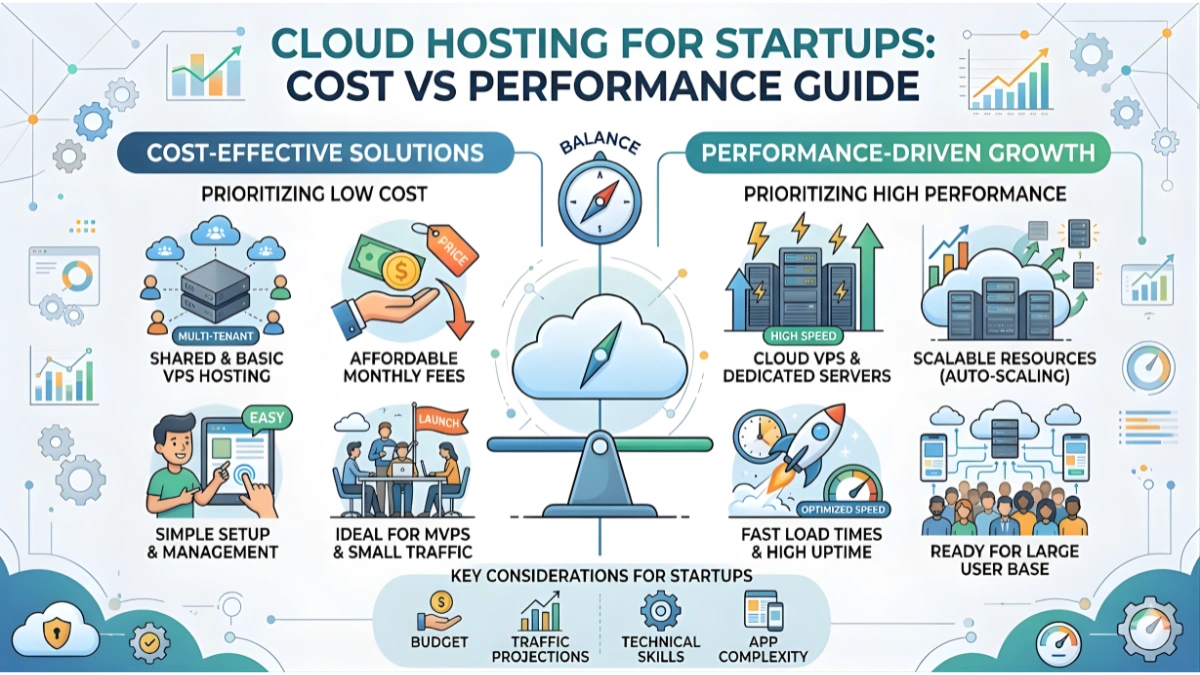
Startups usually face a difficult hosting decision because they need strong website performance without spending too much during early growth stages. In 2026, cloud hosting has become one of the most practical choices for startups because it allows businesses to begin with smaller server resources and expand gradually when traffic increases. Unlike traditional hosting, cloud infrastructure gives startups better uptime, flexible billing, and stronger reliability without requiring immediate investment in large server capacity. The real challenge is finding the right balance between monthly cost and actual performance so that early budgets remain controlled while digital growth stays smooth. For most startups, choosing the right cloud hosting plan early can reduce future migration problems and improve long-term technical stability.
Why Startups Usually Begin with Lower Cloud Plans
Most startups do not need large server resources in the beginning because website traffic often starts at a manageable level. A smaller cloud plan allows the business to launch without unnecessary infrastructure cost while still maintaining professional website speed. Choosing a moderate plan also helps founders understand actual traffic patterns before upgrading. If growth happens faster than expected, cloud hosting makes upgrades easier without changing the entire hosting environment. This flexibility is one of the strongest reasons startups increasingly choose cloud infrastructure over traditional shared hosting.
Why Performance Still Matters Even at Early Stage
A startup website often creates the first impression for customers, investors, and early users, which means slow loading can damage trust immediately. Even if traffic is not very high, weak server response can reduce engagement and hurt search visibility. Fast page loading improves user experience and helps startups present themselves more professionally. This is why startups should not choose hosting based only on the cheapest monthly number, but also on server quality, SSD performance, and uptime consistency.
| Startup Priority | Hosting Focus | Main Strength |
|---|---|---|
| Low Initial Cost | Entry-level cloud plans | Budget-friendly launch |
| Flexible Growth | Scalable cloud resources | Easy upgrades |
| Stable Performance | SSD cloud infrastructure | Faster loading speed |
| Managed Support | Beginner-friendly dashboard | Lower technical workload |
| Predictable Billing | Fixed monthly plans | Easier financial planning |
Managed Cloud Hosting Helps Startups Reduce Technical Burden
Cloudways remains highly attractive for startups because it simplifies backups, server monitoring, and scaling inside one dashboard. Many startup founders do not have full-time infrastructure teams, so managed hosting reduces technical pressure and prevents common server mistakes. This allows business focus to remain on product development and growth instead of server administration.
Why Transparent Pricing Is Important for New Businesses
DigitalOcean remains popular among startups because pricing stays easy to understand and server upgrades remain predictable. Transparent billing helps founders control monthly expenses without unexpected charges. When budgeting is tight, knowing exactly what the hosting bill will look like each month becomes very important.
How Startups Should Think About Future Growth
A hosting plan should not only fit current traffic but also support future growth without major migration. If marketing campaigns succeed or product demand rises, the startup should be able to increase resources quickly. Cloud hosting is valuable because scaling usually happens inside the same infrastructure.
Which Hosting Approach Makes Most Sense
For early-stage startups, the strongest value often comes from choosing a balanced cloud plan with enough performance for current traffic and enough flexibility for future upgrades.
Conclusion: Startups benefit most from cloud hosting plans that keep monthly cost controlled while still delivering stable performance and easy growth options.
Disclaimer: Hosting plans, included resources, and pricing may vary depending on provider updates and regional availability. Startups should compare current specifications before selecting a long-term cloud plan.